

Mount Nelson afternoon tea experience. Cape Town. Guided

Starting From €85.30

Indulge in an opulent afternoon tea at Cape Town's historic Mount Nelson Hotel, featuring a lavish spread of pastries, sandwiches, over 40 teas, and live music in a refined setting. Departs Mon-Sat at 3:00pm. Min 1. Max 10. Duration 2.5 hours.

Enjoy an elegant afternoon tea at the iconic Mount Nelson Hotel in Cape Town, a historic establishment renowned for its refined style and tranquil gardens.

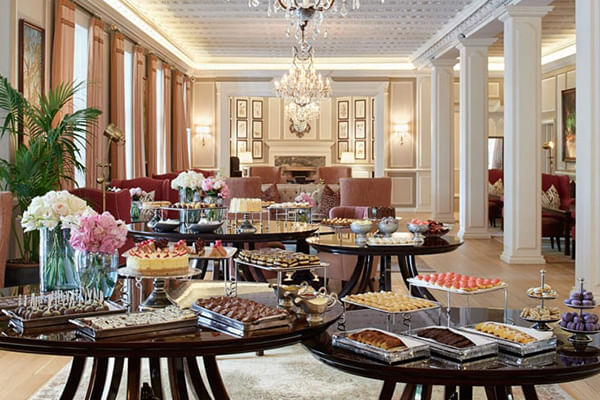
Be welcomed into the hotel's illustrious lounge or classy conservatory for a high tea experience surrounded by timeless décor and elegant ambience.

Savour an extensive selection of more than 40 finest teas from around the world, carefully curated to complement the delicate flavours and sophisticated treats on offer.

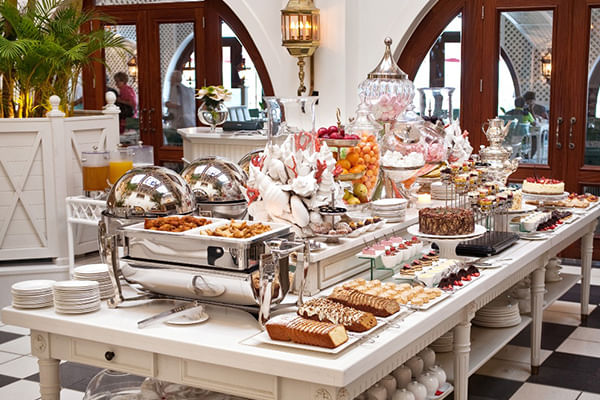
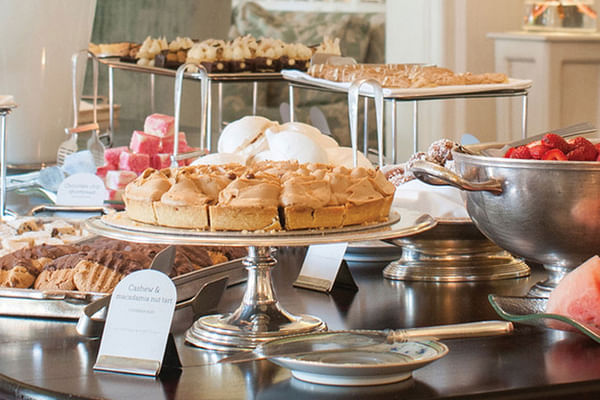
Feast on a lavish spread featuring classic finger sandwiches, freshly baked scones with clotted cream and preserves, exquisitely crafted pastries, cakes, and South African sweet and savoury specialities prepared by world-class pastry chefs.

Soak up live piano music accompanied by seated table service that ensures every detail of your experience is perfected and attended to.

Perfect for celebrations, intimate gatherings, or a luxurious treat, this afternoon tea blends historic tradition with special culinary delights.

Meeting Point
Mount Nelson, A Belmond Hotel, Cape Town, Orange Street, Gardens, Cape Town, South Africa
Cape Town, Cape Town, South Africa, ZA
What's Included
  • A reserved table at Mount Nelson Hotel
  • Extensive selection of over 40 international teas
  • Array of pastries, cakes, sweet and savoury treats, finger sandwiches
  • Freshly baked scones with clotted cream and preserves
  • Live piano music (available during certain sittings)
What's Not Included
  • Alcoholic beverages
  • Gratuities
Requirements
  • Please bring confirmation of your reservation
  • Cash/card for optional expenses
Important Notes
  • Dress code is smart casual; no sportswear or beachwear permitted. 
  • Not suitable for infants or very young children due to the refined atmosphere.
  • Children 8 years and older are allowed (no discount applies).
  • A 10% gratuity will be charged for bookings of 6 guests and more.

Local context

Gardens & the City Bowl: Cape Town’s cultural corridor under Table Mountain

Cape Town’s Gardens suburb sits on the slope of the City Bowl directly beneath Table Mountain and Lion’s Head, which gives the area a distinctive “mountain-meets-city” feel. It’s also one of the most walkable pockets for pairing a refined sit-down experience with nearby parks, galleries, and historic institutions.

  • Company’s Garden is a long-standing green refuge near the CBD and a natural place to decompress before or after an indulgent indoor treat.
  • The Gardens/Company’s Garden precinct is home to major national collections, including the Iziko South African Museum (natural history, archaeology) and the Iziko South African National Gallery.
  • You’re close to the Houses of Parliament, so the neighborhood often feels like the civic heart of the Mother City.
  • Kloof Street and the surrounding side roads are a well-known hub for cafés, boutiques, and design-forward local businesses—useful if you want to extend the day with a low-effort wander.
  • If you’re planning multiple stops, this area is a good “base layer” for Cape Town: you can pivot to Table Mountain trails, the Atlantic Seaboard, or the V&A Waterfront without committing to a full day out of the city center.
Cape Town weather patterns that shape a relaxed afternoon in the City Bowl

Cape Town’s Mediterranean climate has a big impact on how your day feels, even if your main plan is indoors. Winters are generally mild and wetter (roughly June–September), while summers are warm, dry, and often breezy (roughly December–March).

  • In winter, passing cold fronts can bring bursts of rain and strong north-westerly winds—handy context if you’re combining your outing with a museum stroll or a quick garden walk.
  • In warmer months, the south-easter (the “Cape Doctor”) can be surprisingly forceful; it’s great for clearing haze but can make outdoor viewpoints feel cooler than expected.
  • Heat spikes do happen when berg winds blow from the Karoo interior; plan any walking segments with shade in mind.
  • The City Bowl’s microclimates vary by slope and exposure—conditions can differ noticeably between the CBD, Gardens, and the mountain’s lower edges.
  • Water and air temperatures around Cape Town can vary sharply between the Atlantic Seaboard and False Bay; if you’re tacking on a seaside stop, expect different “feels” on the same day.
Cape fynbos context: why the mountain above you matters

Even in central Cape Town, you’re never far from globally significant nature. Table Mountain National Park runs along the Cape Peninsula and forms part of the Cape Floral Kingdom, a region celebrated for exceptional plant diversity and endemism.

  • Table Mountain National Park stretches roughly 70 km from Signal Hill/Table Mountain down to Cape Point, and it includes a Marine Protected Area along parts of the peninsula.
  • UNESCO lists the Cape Floral Region Protected Areas as a major centre of terrestrial biodiversity, highlighting fynbos—fine-leaved shrubland adapted to Mediterranean conditions and periodic fires.
  • That fire-adaptation is part of the ecology: seeing recovering vegetation on the mountain slopes isn’t unusual after burn cycles.
  • SANParks notes rich urban-adjacent wildlife viewing potential in the park (including extensive birdlife), which is one reason locals treat quick nature “micro-adventures” as part of city life.
  • A good low-impact traveler habit here is to treat fynbos as fragile: stay on formal paths in natural areas, don’t pick plants, and clean footwear after hikes to reduce seed spread between reserves.
Local tea culture: from rooibos to fynbos botanicals

Afternoon tea in Cape Town often goes beyond classic black teas, because the Western Cape is closely associated with distinctive botanical infusions. If you spot local options on a tea list, you’re tasting a thread that ties the city to the surrounding landscapes.

  • Rooibos (Aspalathus linearis) is a caffeine-free herbal infusion made from a plant that grows in South Africa’s fynbos biome; it’s commonly cultivated in the Cederberg region of the Western Cape.
  • The name “rooibos” comes from Afrikaans for “red bush,” and the drink’s global popularity has helped put South African botanicals on international tea menus.
  • “Buchu” refers to fragrant shrubs in the genus Agathosma (native to southern Africa); historically, buchu leaves were also prepared as infusions and remain strongly linked to Cape herbal traditions.
  • Cape Town’s food story is also shaped by centuries of maritime trade and migration; the city’s historical links to the Dutch East India Company era and enslaved peoples from regions like Indonesia and Madagascar helped form today’s Cape Malay heritage.
  • If you enjoy tasting flights, a useful approach is to sample one classic tea and one indigenous infusion side-by-side to notice how “terroir” shows up as floral, resinous, or earthy notes.