
Inshore fishing charter, False Bay. Cape Town. Guided

Starting From €882.89

Join a memorable inshore fishing charter in False Bay near Cape Town. Enjoy year-round fishing with expert crew and top-tier gear. Suitable for all experience levels; maximum 8 (10 by special arrangement).

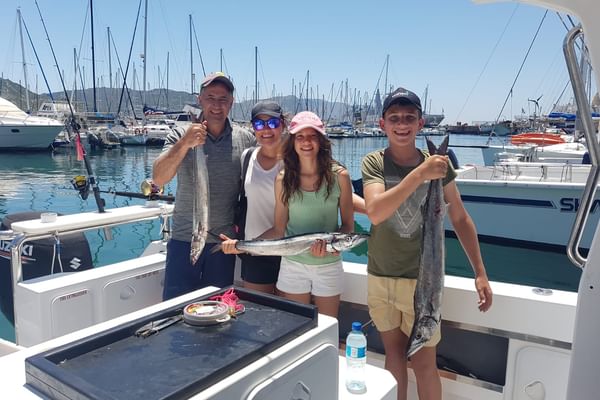
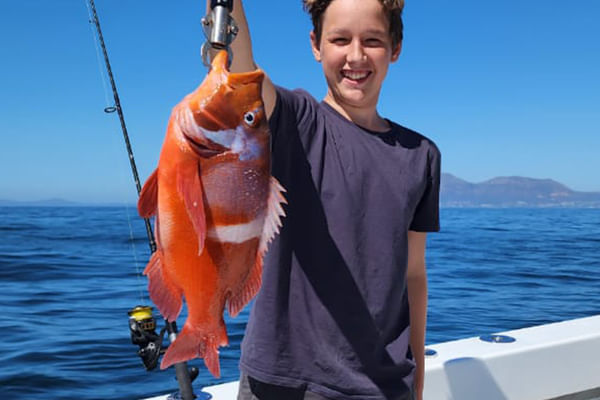
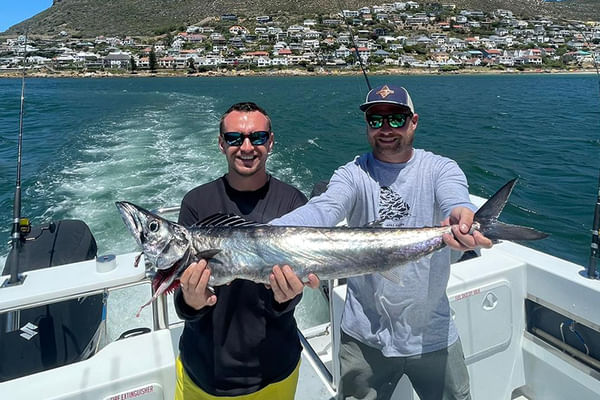
Experience the thrill of inshore fishing in the beautiful waters of False Bay, just a short drive from Cape Town. Cast your line for yellowtail, snoek, kob, and reef fish while surrounded by breathtaking mountain and coastal scenery. Enjoy the calm, sheltered bay waters — perfect for seasoned anglers and first-timers alike — aboard a custom-built 30ft catamaran equipped for comfort and safety.

Our expert crew provides top-quality fishing gear, hands-on guidance, and friendly support, making this adventure ideal for families, groups, and solo adventurers. With a 90% catch rate, expect plenty of action and memorable moments as you reel in your catch of the day.

Departures are year-round, with summer and winter schedules to match the seasons. Join us for an authentic, exhilarating maritime escape and create memories that will last a lifetime!

Meeting Point
False Bay Yacht Club, Simon's Town
King George Way, Simon's Town, Western Cape, 7975, ZA
What's Included
  • Boat charter (custom 30ft catamaran) with expert crew
  • Top-quality fishing tackle and bait
  • Safety equipment
  • Guidance and tuition for all levels
  • Life jackets
  • Soft drinks and water
  • Toilet onboard
  • Arranging one month recreational fishing license if required (details needed prior to trip)
What's Not Included
  • Snacks and additional drinks (bring your own)
  • Sunblock, hats, and sunglasses
  • Seasick medication (bring your own as advised by your doctor)
  • Fish cleaning and filleting (can be arranged ashore, not on boat)
Requirements
  • ID or passport details required for fishing license
  • Arrive on time, ready for a day outdoors (suggest closed shoes and a warm jacket)
  • Valid fishing license (can be arranged)
Important Notes
  • Maximum of 8 people per charter; up to 10 by special arrangement (extra cost applies for 9th and 10th guests)
  • Strict bag and size limits per fishing laws
  • Fish may not be cleaned onboard
  • Weather may affect departure; refunds available if canceled due to adverse conditions

Local context

False Bay & Simon’s Town: where Cape Peninsula scenery meets working harbours

False Bay curves along the eastern side of the Cape Peninsula, with Simon’s Town sitting on Simon’s Bay—an area long valued as a protected harbour and naval base. The wider peninsula landscape is managed as part of Table Mountain National Park, which stretches from Table Mountain and Signal Hill down to Cape Point and includes a Marine Protected Area (MPA).

  • For a quick sense of geography, picture the bay framed by mountain slopes on the peninsula side, with broad sandy shoreline across the northern arc.
  • Simon’s Town’s maritime character is more than postcard scenery: it’s home to Naval Base Simon’s Town and has been a naval harbour for centuries.
  • Nearby peninsula highlights (great for pairing with a morning or afternoon on the water) include Cape Point/Cape of Good Hope viewpoints and the coastal road scenery around the southern peninsula.
  • Expect a mix of working-waterfront energy and nature-focused experiences—harbours, slipways and marinas sit alongside protected coastlines.
  • If you’re exploring between activities, the town has museums and heritage sites that reflect its naval and community history.
  • Keep an eye out for the way weather and light change across the bay; the same viewpoint can look completely different from calm, clear winter days to windy summer afternoons.
Wind, swell, and water shifts: what makes False Bay feel different day to day

False Bay can feel deceptively calm because it offers shelter from many directions, yet conditions can change quickly with wind and offshore swell. Summer often brings strong south-easterly winds (the famous Cape “Doctor”), while winter patterns can deliver larger south-westerly swell energy that wraps toward the bay.

  • South-easterly summer winds can kick up short-period wind waves and chop, especially over open stretches.
  • Winter systems can increase swell and make the sea feel more powerful even when skies look clear—plan flexible time around weather windows.
  • False Bay also experiences upwelling events (notably near Cape Hangklip) that can drop sea-surface temperatures noticeably, even in warm months.
  • Currents and water movement vary with wind; when winds are light, tides and local circulation patterns become more noticeable.
  • Treat rocks and ledges with respect: the region is known for occasional unexpectedly large waves along parts of the False Bay coastline.
  • Pack for rapid changes: a calm, sunny start can turn into wind-chill conditions on the water within the same outing.
Marine wildlife and conservation context around the Cape Peninsula (MPA-aware)

The Cape Peninsula sits in a globally significant marine transition zone influenced by major ocean currents, which helps explain the area’s high biodiversity. Much of the coastline and inshore waters around the peninsula fall within a formally managed Marine Protected Area framework, balancing recreation with sensitive habitats.

  • Look out for seabird activity (like gannets and terns) over baitfish—an easy, natural “tell” of life in the water even when the surface looks quiet.
  • Simon’s Town is the gateway to Boulders, a rare, land-based colony of endangered African penguins; observe wildlife calmly and never touch or feed penguins.
  • The Table Mountain National Park MPA includes restricted “no-take” zones where removing marine life is not allowed—these areas function as refuges and breeding grounds.
  • Responsible wildlife viewing matters: give marine mammals and seabirds space, keep noise down near sensitive coastlines, and follow any local approach-distance guidance.
  • If you snorkel or explore tide pools before/after your day on the water, avoid standing on kelp holdfasts or reef life; small impacts add up in high-use areas.
  • Bring a “leave no trace” mindset offshore too—secure plastics and line so nothing can blow or wash overboard.
Recreational fishing in False Bay: permits, protected zones, and good angler etiquette

False Bay is a major hub for shore and boat angling, and the nearby Table Mountain National Park Marine Protected Area adds an extra layer of rules designed to protect biodiversity under heavy use. The key idea is simple: know which rules apply where you’re fishing, and respect controlled vs restricted zones.

  • Permits are part of the system in South Africa’s marine environment (under the Marine Living Resources Act framework); different activities can require different permits.
  • Within the Table Mountain National Park MPA, fishing and extractive activities are regulated, and some activities are prohibited—always confirm what’s allowed for your method and area.
  • SANParks notes that MPA areas include restricted zones (“no-take” areas) where fishing/extraction is not permitted; staying clear protects breeding and nursery habitats.
  • If you plan to keep fish, familiarize yourself with current size and bag limits before you travel; rules can change and may differ by species and zone.
  • Practice “clean handling” even when keeping a catch: wet hands, minimize time out of water, and avoid dropping fish on deck to improve survival when releasing.
  • Be a good ocean neighbor: stow hooks/line securely and dispose of fishing waste properly—lost tackle is a serious hazard for seabirds and marine life.